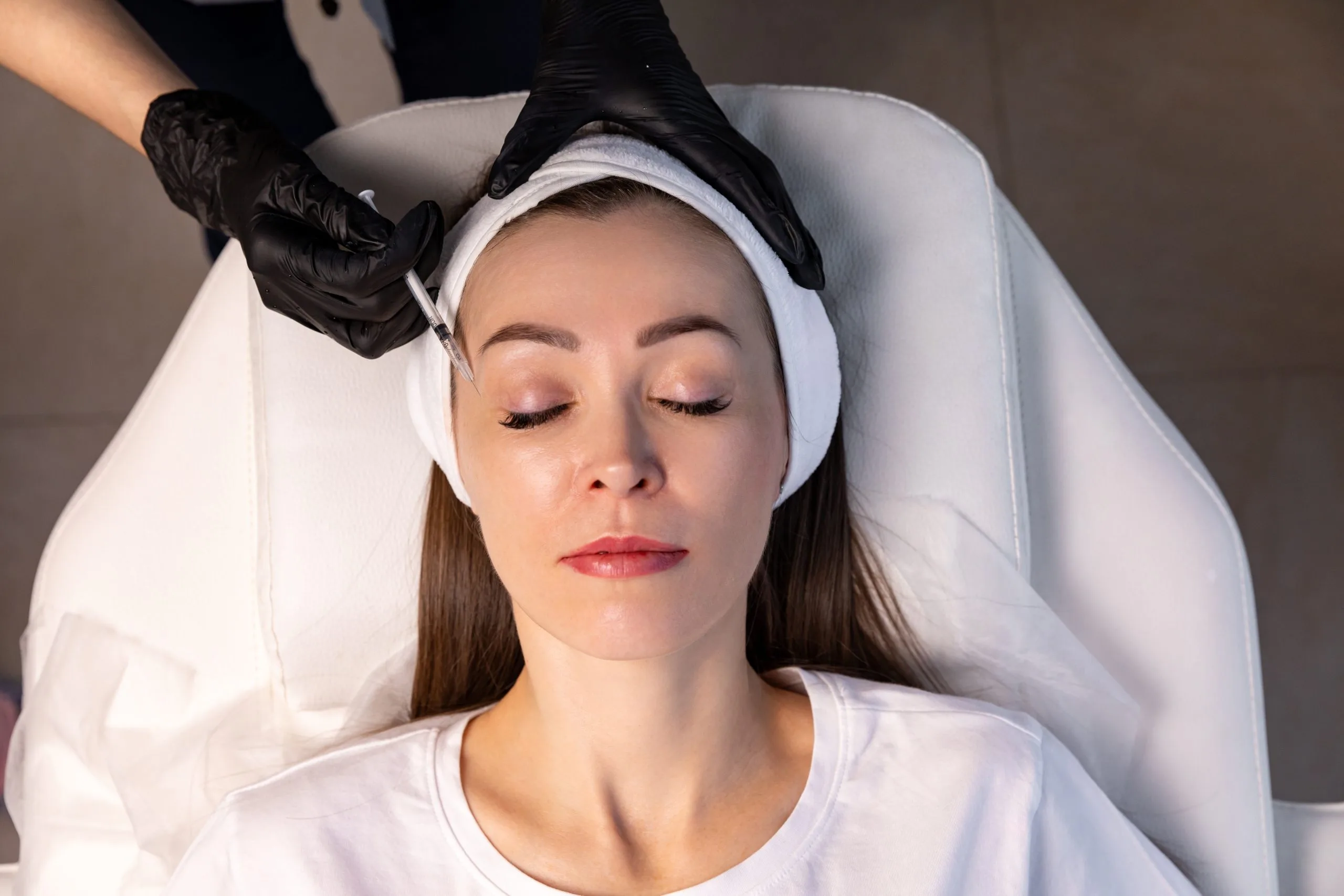
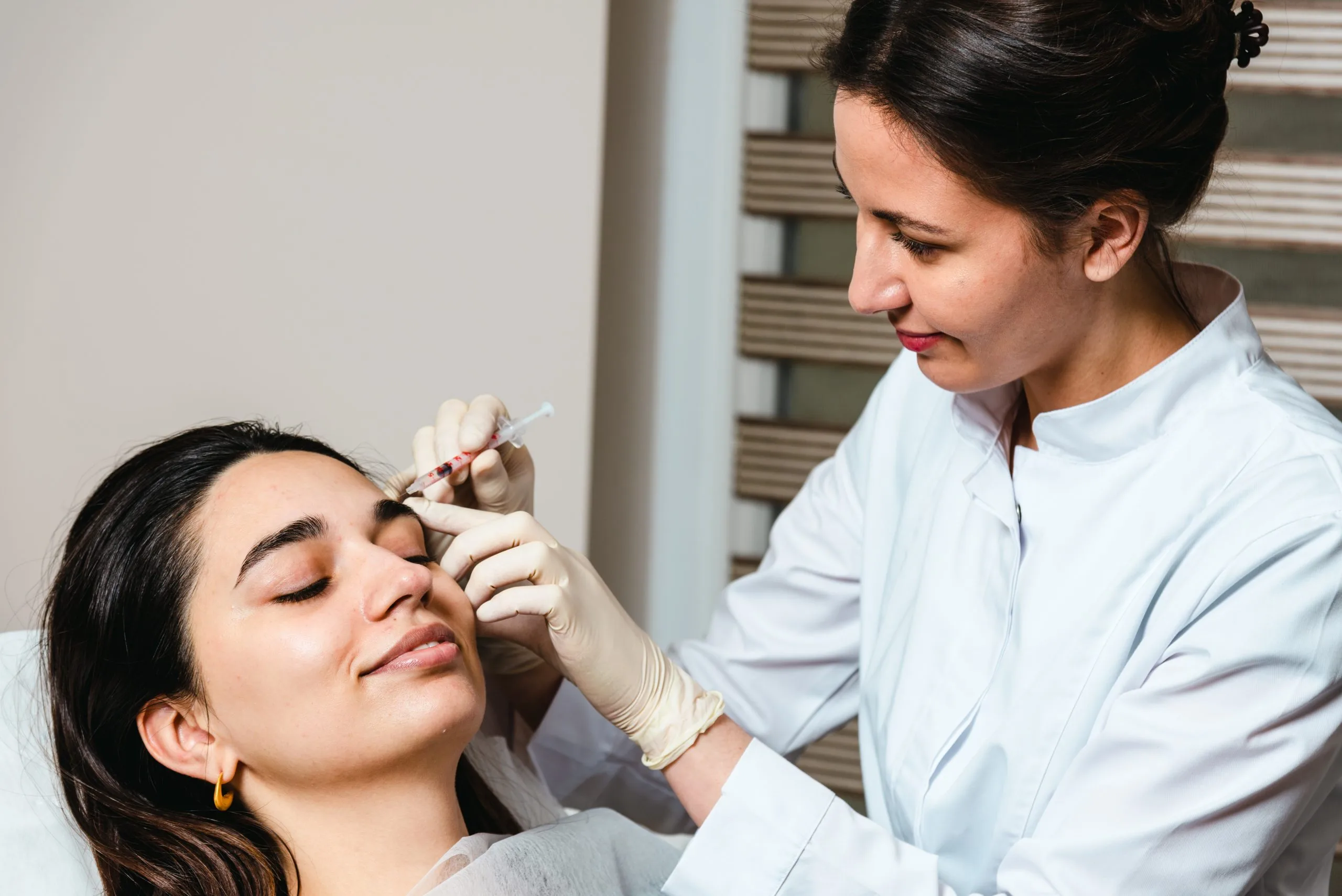
If your concern is lines that show up when you move your face, like frown lines, forehead lines, and crow’s feet, Botox is usually the better fit. If your concerns are lost volume, hollow areas, or lines that remain visible even when your face is relaxed, fillers are usually the better fit. Many people benefit from a little of both, and a skilled injector can tell you which group you fall into in a single consultation.
It’s normal to feel unsure. Most people worry about looking “frozen” or overdone, or about spending money on the wrong treatment. Let’s clear up the confusion so you can walk into your appointment feeling confident.
Think of a creased piece of paper versus a deflated pillow. The paper has lines from being folded over and over. The pillow has lost its stuffing. You’d fix them in different ways.
Botox is a brand name for a type of treatment called a neurotoxin. Tiny amounts are placed in specific facial muscles to soften their movement. When a muscle relaxes, the skin above it stops creasing. That’s why it works so well on “expression lines.”
Dermal fillers are soft gels, most often made from hyaluronic acid, a substance your body already makes. They restore volume, smooth deeper creases, and add shape where your face has lost support over time.
Botox is often the right pick if you notice lines that deepen when you laugh, squint, or concentrate. Common areas include:
Forehead lines that appear when you raise your eyebrows
Frown lines between the brows (the “11s”)
Crow’s feet at the outer corners of your eyes
A heavy-looking brow that could use a gentle brow lift
Botox isn’t only for wrinkles, either. It can also slim a clenched jaw through masseter treatment or create a subtle lip flip.
Carole Rashid, NP, founder of Renaissance Aesthetics, explains that restraint matters most here.
“The goal with neurotoxins is never to freeze your face,” she says. “I want you to still look like you, just more rested, and still able to show every emotion.”
Fillers shine when the issue is a lack of volume rather than muscle movement. As we age, we lose fat and bone support in the face. That creates hollows, sagging, and lines that don’t go away when your face is still. Fillers can help with:
Thin or uneven lips
Flat or hollow cheeks
Dark, hollow under-eye areas
A soft jawline or a recessed chin
Carole notes that many patients are surprised by where she starts.
“Often the spot that’s bothering someone isn’t the spot that needs treatment,” she says. “A deep line near the mouth can really be a sign that the cheek has lost support. Lift the cheek, and the line softens.”

Faces don’t age in one spot. Muscles, volume, and skin all change together, so treating a single line often isn’t enough. That’s the idea behind facial balancing, Carole’s full-face approach to proportion, symmetry, and volume.
“Treating one feature at a time is like painting one corner of a canvas,” Carole says. “When I look at the whole face, I can use less product overall and get a result that looks more natural.”
Some patients relax their frown lines with Botox while adding subtle cheek support with filler. The two treatments complement each other rather than compete.
Here are a few things you probably won’t find on a typical page about Botox:
Botox started as an eye treatment. Doctors first used it to treat eyelid spasms and crossed eyes. Patients kept mentioning smoother frown lines, and a new cosmetic use was born.
Hyaluronic acid once came from rooster combs. Early versions of the ingredient were harvested from them. Today it’s made through fermentation in a lab, with no animal source needed.
Your skin holds about half of your body’s hyaluronic acid. It’s a big reason skin looks plump and dewy when we’re young.
One gram of hyaluronic acid can bind up to six liters of water. That’s a big part of why fillers feel soft and natural instead of stiff.
Some patients say their results last longer over time. When a muscle is relaxed regularly, some people find they frown less out of habit. Results vary from person to person.
Faces change earlier than most people think. Volume loss can begin in your late twenties or thirties, long before deep wrinkles show up.
Do the lines show up only when I move my face? That points toward Botox.
Does my face look flatter, hollow, or less defined than it used to? That points toward fillers.
Do I see both? Then a combined plan may give the most natural result.
Since Botox wears off in a few months, staying on schedule helps results look steady instead of coming and going. Our team offers a membership built around that rhythm. You can also review the pricing page before you book, so nothing about cost is a surprise.
Results depend heavily on who holds the syringe. Facial anatomy is complex, and small placement errors can change your expression or shape. At Renaissance Aesthetics, your care is never passed around. Carole performs every treatment herself, from consultation to injection.
“I want every patient to feel heard and never pressured,” Carole says. “If a treatment isn’t right for you, I’ll tell you. Sometimes the best plan is doing less.”
You can learn more about her training and philosophy on the About page, or browse real patient results in the before-and-after gallery.
Botox and fillers aren’t rivals. They’re different tools for different concerns, and the right choice depends on your face, your goals, and your comfort level. A one-on-one consultation is the easiest way to get a clear plan that fits you.
Renaissance Aesthetics is located at 5335 Langston Blvd., Arlington, VA 22207. Call (571) 257-5510 or explore Renaissance Aesthetics to book your consultation.